
Networking, Fiber, and Low-Voltage Build-Outs
Every system we install rides on a network. Cameras, access control, alarm communication, and building controls all fail the same way when the cabling or the switching underneath them is an afterthought.
So we build that layer properly: structured cabling, fiber, racks, switching, and wireless, for new fit-outs and for buildings being cut over from something older. We work in UniFi, EdgeMax, Arista, and Cisco, and we are equally happy installing equipment you or your vendor supply.
What we do
Three kinds of job, and most sites are some combination of them.
Low-Voltage Build-Outs
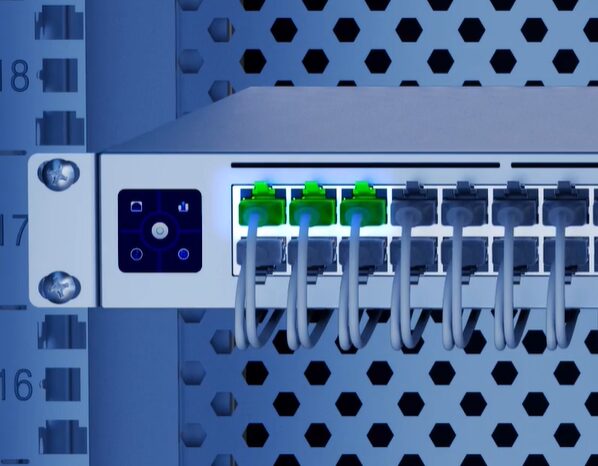
Structured cabling from scratch for a new fit-out or an expansion. Cable pathways, terminations, patch panels, racks, and PoE switching, labeled and documented so the next person can follow it.
Fiber Installs
New fiber runs between buildings and floors, splicing and termination on existing fiber, and testing. Commercial and municipal work where copper distance limits or electrical noise rule out anything else.
Network Transitions
Cutovers from aging or unsupported gear to a current platform, planned so the business keeps running. Staged migrations, out-of-hours cutovers, and a rollback plan that exists before we start.
Vendor-neutral, deliberately
We are not trying to sell you a particular badge on the front of a switch. What matters is that the design fits the building, the budget, and whoever has to support it afterwards.
If you already have a standard, we work to it. If you do not, we will tell you what we would put in and why, including what it costs to run in five years.
Fiber, where copper runs out
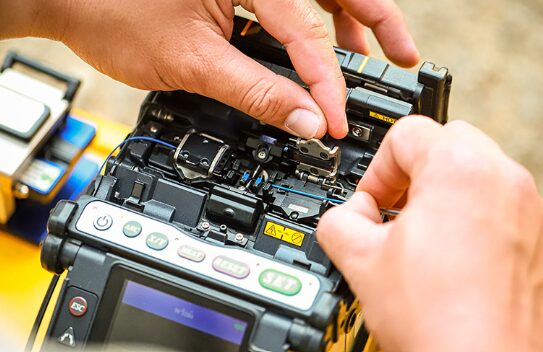
Past about 100 meters, or anywhere the run crosses a parking lot, a service corridor, or a building boundary, fiber is the answer. Our staff install new fiber, splice and terminate existing fiber, and maintain what is already in the ground.
Network transitions, without the outage
Replacing live network gear is the part everyone worries about, and reasonably so. The way we handle it is unglamorous: document what is actually there first, agree what has to stay up and during which hours, stage and configure the new equipment before it goes near the rack, then cut over in planned windows with a way back at every step.
On sites where downtime is genuinely not an option, we run old and new in parallel and move services across a few at a time. It costs a bit more in equipment and labor, and it removes the all-or-nothing evening that goes wrong.
You should be able to see your own network
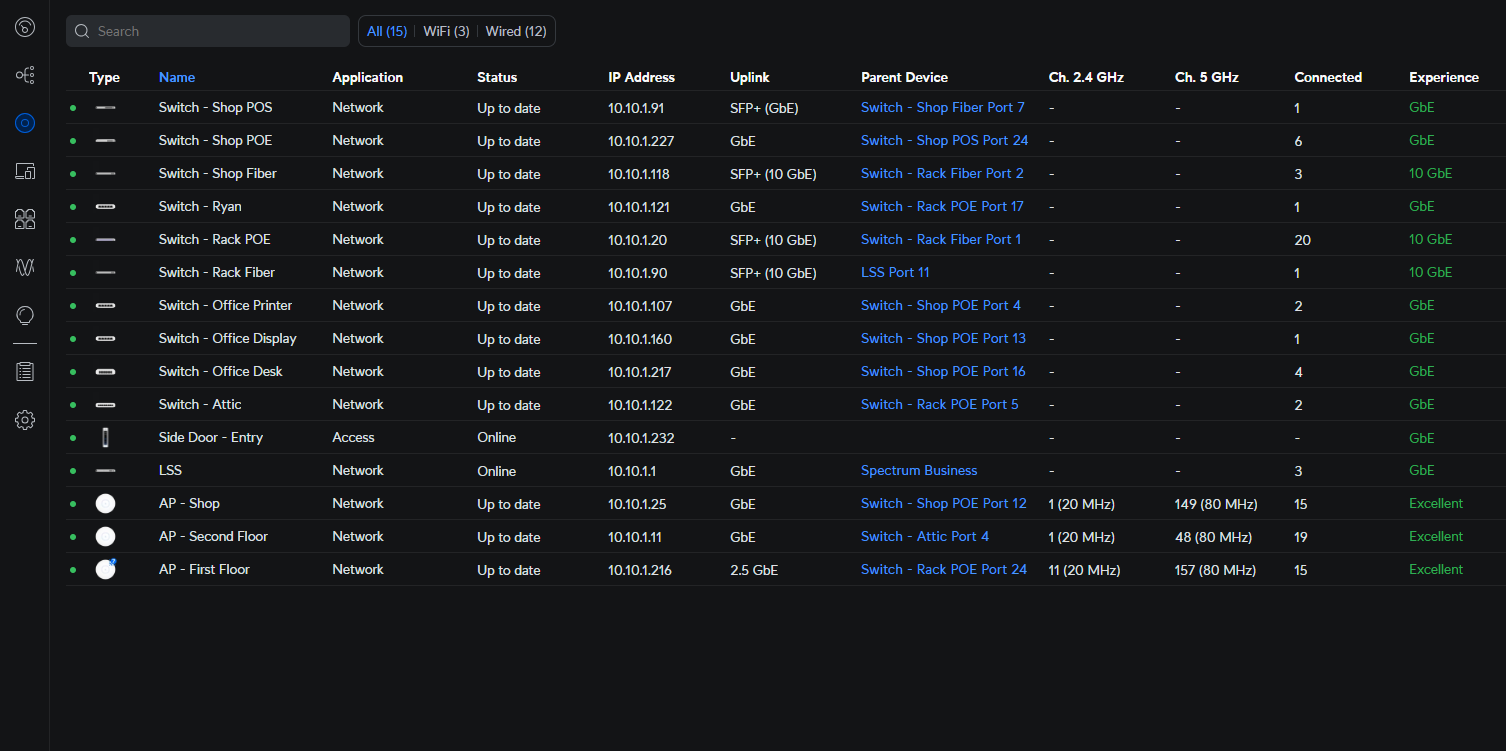
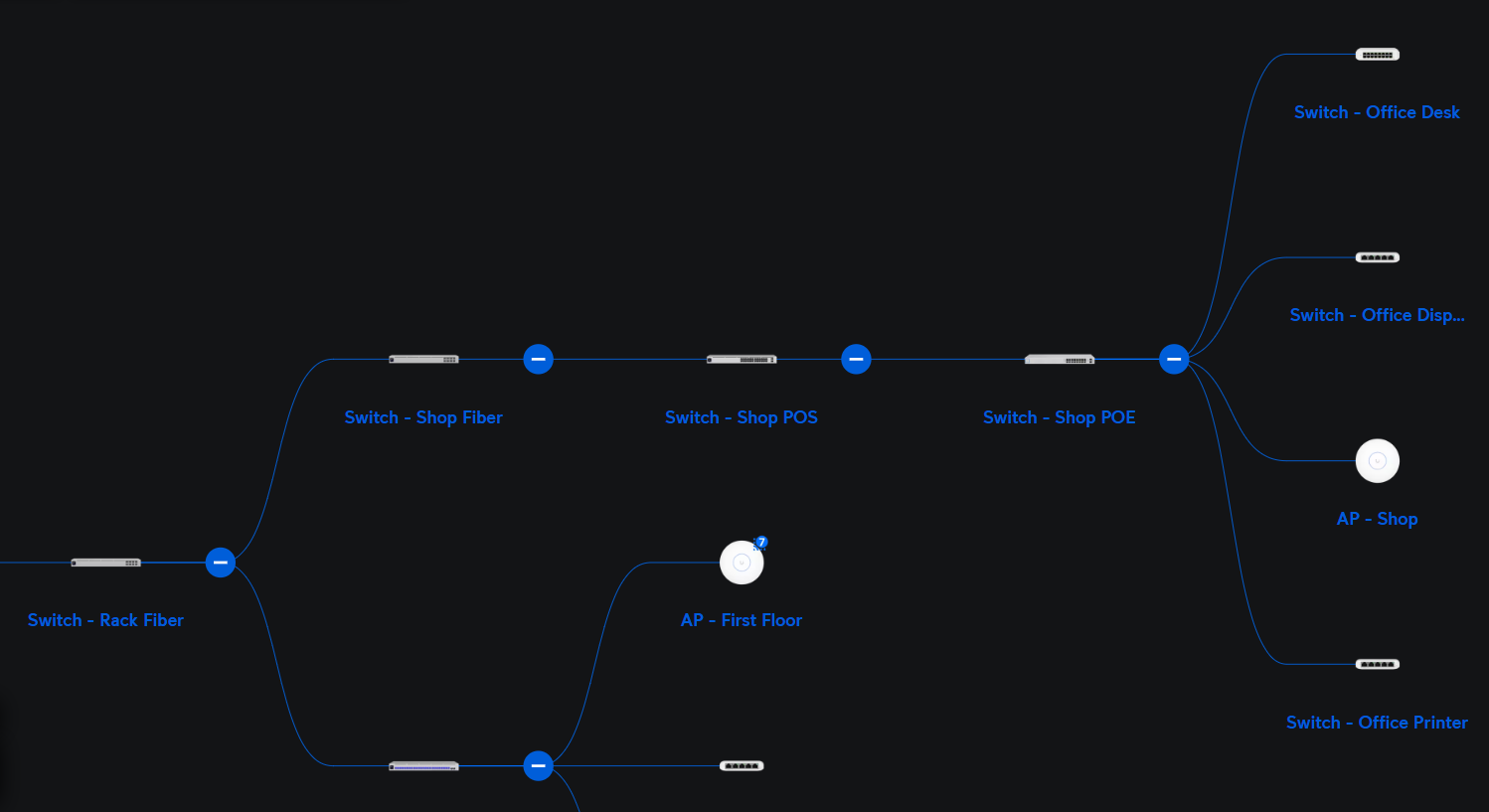
Every build we hand over comes documented, labeled, and visible: a topology you can read, ports that map to rooms, and monitoring that tells someone when a link or a device goes down, rather than waiting for a phone call.
Carriers and providers we work with
We are not tied to one carrier. On a build we coordinate directly with whoever serves the building: ordering the circuit, scheduling the demarc, and making sure the handoff lands where the equipment is actually going. These are the providers we deal with most often across the Hudson Valley, and the ones available at our partner 845 Data’s carrier-neutral colocation facility.

What can actually be delivered depends on the address, and fiber availability in particular changes street by street. We check what is serviceable at your building before anything gets designed around it, and we are happy to work with a carrier you already have.
Who runs it afterwards
We design and install the infrastructure your security systems ride on. For ongoing, day-to-day network management, that work transitions to our long-term partner 845 Data, so your security systems and your business network each get a dedicated specialist. One design, two teams, no finger-pointing.
If you already have an IT provider or an internal team, we hand over to them instead, with the documentation to make that a clean handoff. We also coordinate directly with your ISP and vendors during the build so the circuits and the equipment land in the right order.
Free Network Assessment
Send us a floor plan or walk us round the building. We will tell you what the cabling and switching need to be for the systems you are putting in, what can be reused, and what it costs.
Contact Us